

Shopify API
Fire Systems
Jul 31, 2021
Głowice tryskaczowe i przegląd Pytania i odpowiedzi
Why Naso Supply?


ZRASZACZ ŚCIENNY 1/2", szybkiego reagowania, chromowany, (kod daty: 2023), z atestem UL/FM
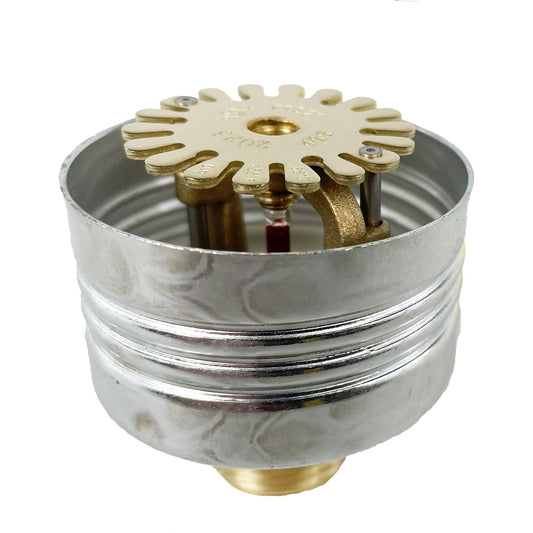
ZRASZACZ PENDENTOWY ZAKRYTY 1/2", (Kod daty: 2023), Szybka reakcja, UL Listed


Zraszacz wiszący 1/2", szybkiego reagowania, mosiężny (kod daty: 2023), z atestem UL/FM
Fire Sprinkler Heads & Inspection FAQ
Get answers to common questions about fire sprinkler heads, NFPA codes, and inspection tips. Perfect for contractors, plumbers, and fire protection professionals.
What are the main types of fire sprinkler heads?
The four primary types are:
- Pendant – hangs from the ceiling, spraying downward in a circular pattern.
- Upright – mounted above piping, spraying water downward with a curved deflector.
- Sidewall – installed on walls, projecting water horizontally for hallways or small rooms.
- Concealed – recessed behind a cover plate for a clean look until activation.
Related Products: Sprinkler Heads
Are there different sprinkler head performance options?
Yes. Sprinklers are classified by response type (standard or quick), coverage area (standard vs. extended coverage), and specialty use (e.g., ESFR, corrosion-resistant, or residential sprinklers).
What are the different types of fire sprinkler systems?
- Wet Pipe – most common, pipes always filled with water.
- Dry Pipe – pressurized air/nitrogen holds water back until activation (used in unheated spaces).
- Pre-Action – requires both detection system activation and sprinkler head operation.
- Deluge – all heads open at once, used in high-hazard areas.
Related Products: Dry Pipe Valves | Pre-Action Valves
What is the NFPA code for fire sprinklers?
NFPA 13 is the standard for design and installation of automatic fire sprinkler systems. It governs placement, spacing, hazard classification, and water supply requirements.
What is the 18-inch rule for fire sprinklers?
Storage must be kept at least 18 inches below sprinkler deflectors to avoid blocking water spray. This ensures proper coverage during activation.
How often should fire sprinkler heads be replaced?
- ESFR, CMSA, and dry sprinklers: test/replace at 20 years.
- Fast-response: test/replace at 25 years (then every 10 years).
- Standard-response: test/replace at 50 years.
Sprinklers must also be replaced if damaged, corroded, painted, or previously activated.
Do sprinkler pipes have to be painted red?
Not always. Local codes may require exposed sprinkler piping to be painted red, but hidden piping often has no color requirement. Sprinkler heads themselves should never be painted.
How many sprinkler heads can run on one line?
This depends on pipe size, pressure, and flow rate. For example, a 2-inch pipe may support up to 8 sprinkler heads at once, while a 2½-inch pipe may support 15 heads. Always verify with NFPA 13 and local code.
Need help selecting the right fire protection components? Browse our Fire Valves and Sprinkler Heads collections.